
Veterans Disability Lawyer
Tinnitus & Hearing Loss disability
When Your Service Leaves You With Hearing Problems
Hearing problems can affect more than what you hear.
Hearing loss and tinnitus are common conditions among Veterans. Military occupations can involve prolonged or repeated exposure to aircraft, artillery, weapons fire, engines, machinery, explosions, generators, and other high-intensity noise. VA research identifies tinnitus and hearing problems as among the most prevalent service-connected disabilities.
Tinnitus is the perception of ringing, buzzing, humming, or another sound without an external source. Hearing loss involves reduced ability to hear or understand sound and may range from mild impairment to profound loss.
Tinnitus is a perception of sound when there is no corresponding external sound. Veterans may describe it as ringing, buzzing, hissing, humming, clicking, or another persistent or intermittent noise.
The VA/DoD 2024 clinical practice guideline recognizes tinnitus as a condition that can affect quality of life and recommends approaches focused on evaluation, education, and management.
Persistent or Intermittent Noise
Current Hearing Problems
How Does VA Rate Hearing Loss?
Hearing loss is evaluated differently from many other VA disabilities. VA uses the results of controlled audiological testing and applies the rating schedule to the findings for each ear.
VA explains that disability ratings are based on evidence, including medical test results and, when required, a C&P examination.
Pure-Tone Audiometry
Speech Discrimination
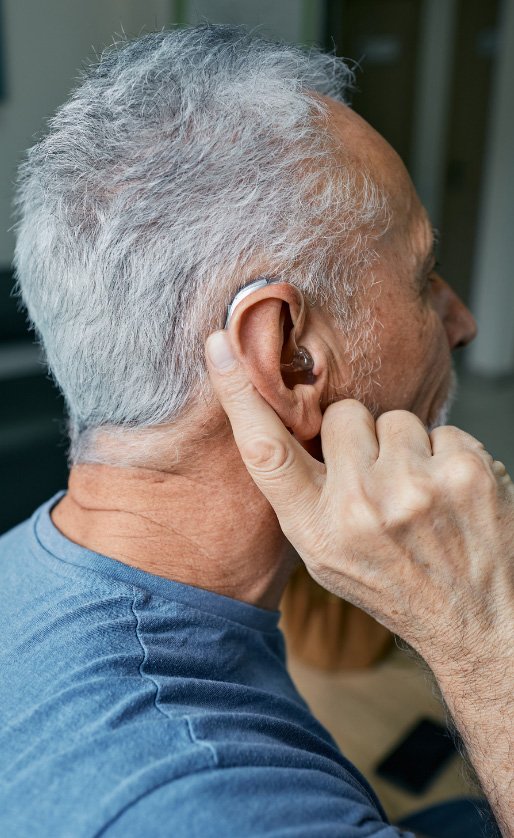
Under the current VA rating schedule, recurrent tinnitus is evaluated under Diagnostic Code 6260. The schedule provides a maximum schedular evaluation of 10 percent for recurrent tinnitus, whether the sound is perceived in one ear, both ears, or in the head. The Veterans Law Center page you referenced also discusses the 10% maximum, but RLGVA’s page follows the current VA regulation rather than copying that source.
Important: Tinnitus and hearing loss are separate disabilities. A Veteran may have a service-connected tinnitus claim and a separate hearing-loss claim when the evidence supports each condition.
What Evidence Can Support a Hearing Loss or Tinnitus Claim?
Medical & Audiological Evidence
- VA audiology records
- Private audiology evaluations
- Hearing test results
- Medical records documenting tinnitus
- Records describing treatment or hearing aids
- Medical opinions addressing the relationship to service
- Documentation of other relevant ear or auditory conditions
Military & Lay Evidence
- DD-214 and personnel records
- Military occupational specialty and duty history
- Records of weapons, aircraft, machinery, or other noise exposure
- Service treatment records
- Statements from fellow service members
- Statements describing when symptoms began and how they progressed
- Statements from family or others who observed hearing difficulties
What happens during a VA Hearing Examination?
Can you seek a Higher Hearing Loss Rating?
Changes That May Be Relevant
- Worsening hearing thresholds
- Greater difficulty understanding speech
- Increasing communication problems
- Greater difficulty hearing in everyday environments
- Changes documented by audiological testing
- Increased functional limitations associated with hearing loss
Review Your Current VA Decision

RLGVA help Veterans make sense of the evidence.
Hearing claims can involve service records, occupational exposure, audiological testing, medical opinions, lay statements, and VA rating criteria.
RLGVA helps Veterans evaluate the legal issues surrounding their claims and pursue the appropriate VA process.
Frequently Asked Questions
Frequently Asked Questions about Hearing Loss & Tinnitus VA Claim
Yes, tinnitus can qualify for VA disability compensation when the requirements for service connection are established. Under the current rating schedule, recurrent tinnitus has a maximum schedular evaluation of 10 percent.
Potentially. Hearing loss and tinnitus are separate conditions. A Veteran may pursue both when the evidence supports service connection for each condition.
No. Tinnitus is a separate disability. Whether it is service connected depends on the evidence establishing the relationship between the tinnitus and qualifying military service.
Military noise exposure can be relevant to hearing loss and tinnitus claims. The individual claim still requires evidence addressing the current condition and its relationship to service.
A normal hearing test at separation does not by itself resolve every later hearing-loss claim. The evidence must be considered as a whole, including current findings, service exposure, medical history, and any medical opinion addressing the relationship to service.
Depending on the decision and evidence available, you may have options such as a Supplemental Claim, Higher-Level Review, or Board Appeal. The appropriate option depends on the reason for the denial.